Craft · April 2026 · 4 min read · by K.R
The Art of the Low Roast
Big factories blast nuts at 220°C for two minutes. We roast low and slow for 12. Here's why speed ruins flavour.
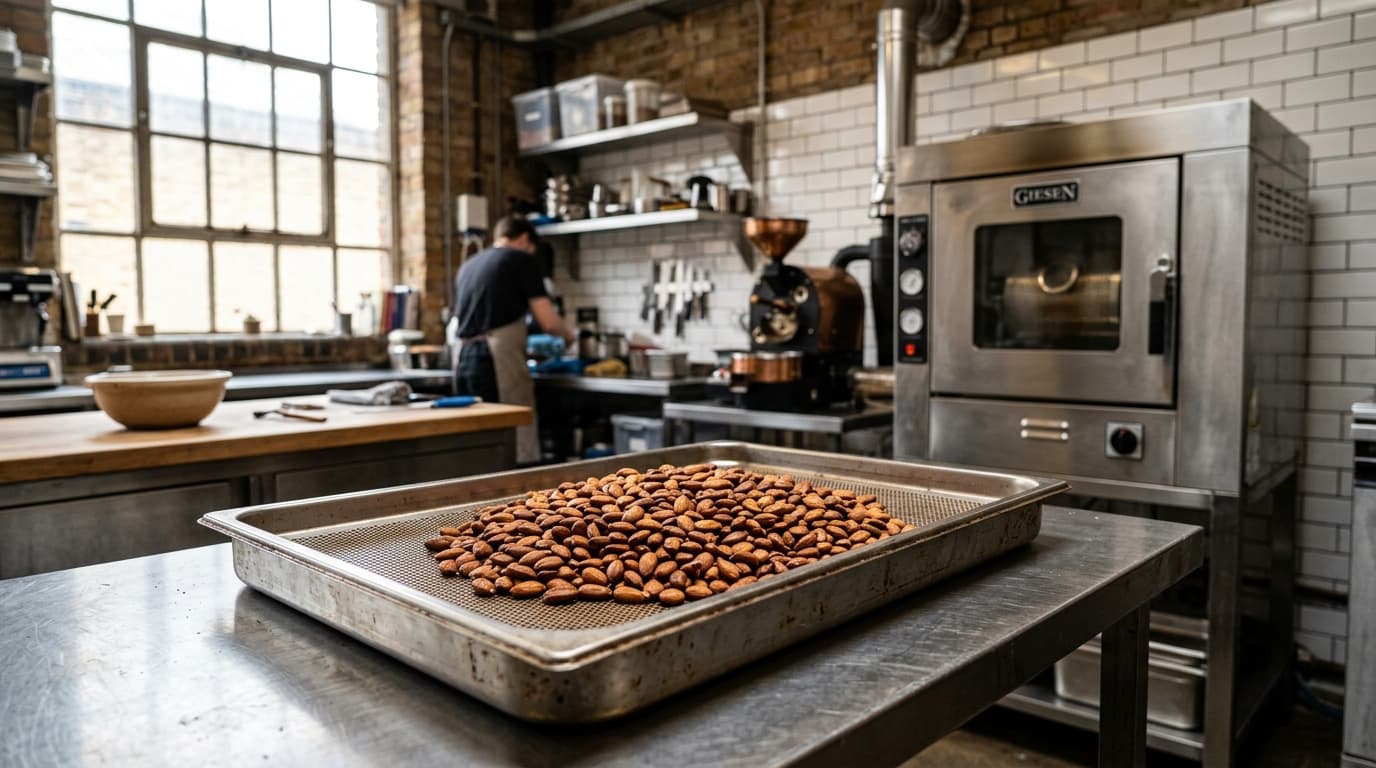
If you walk past a commercial snack factory, you'll smell oil before you smell nuts. Industrial processors blast raw almonds at 220°C or dunk them in hot palm oil for 90 seconds. It's fast, cheap, and churns out thousands of bags an hour. But it also burns off the delicate natural oils that actually carry flavour.
When I started Nutistry in my London kitchen, I tried the standard high-heat method first. Batch 4 came out looking golden on the outside, but inside it tasted like dry cardboard. The outer layer was scorched, the core was basically raw, and after ten minutes in a bowl, the surface went limp.
How high heat breaks a nut
Nuts are packed with natural fats. When you hit them with intense heat, those surface oils oxidise instantly. That bitter, acrid aftertaste you get from cheap mixed nuts isn't "roast character" — it's burnt oil.
Worse, high heat seals the skin before heat can penetrate to the center. You get a quick crunch on the surface, followed by a dense, chewy middle.
Our 12-minute rule
We keep our drum temp steady and let the nuts roast for a full 12 minutes.
At lower temperatures, heat moves slowly to the core. Natural sugars caramelise without charring, and the oils stay inside where they belong. When you bite into a Nutistry almond, it shatters clean all the way through, releasing a deep, toasted sweetness that lingers long after you finish the bag.
It takes six times longer to make a single batch. We throw away more heat-damaged trials than a supermarket factory would ever tolerate. But the moment you taste a slow-roasted pecan next to a factory-fried one, you'll never buy a plastic supermarket tub again.